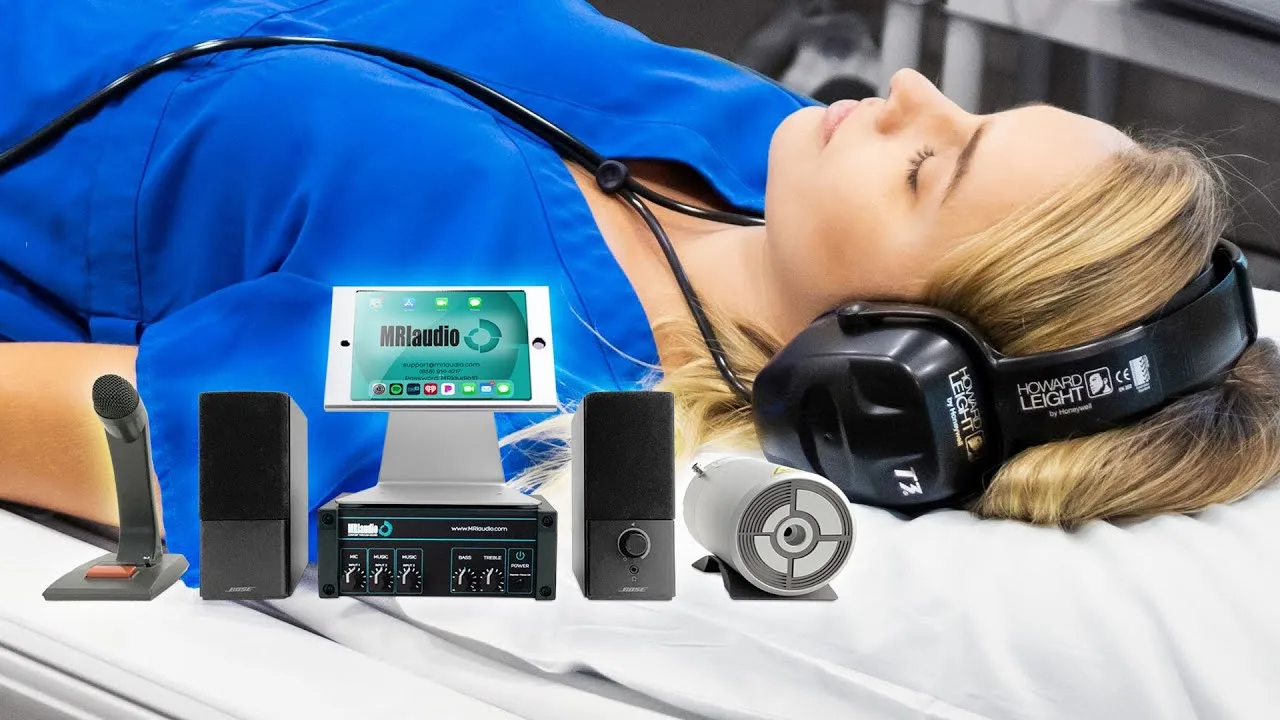
How can patients listen to music during an MRI?
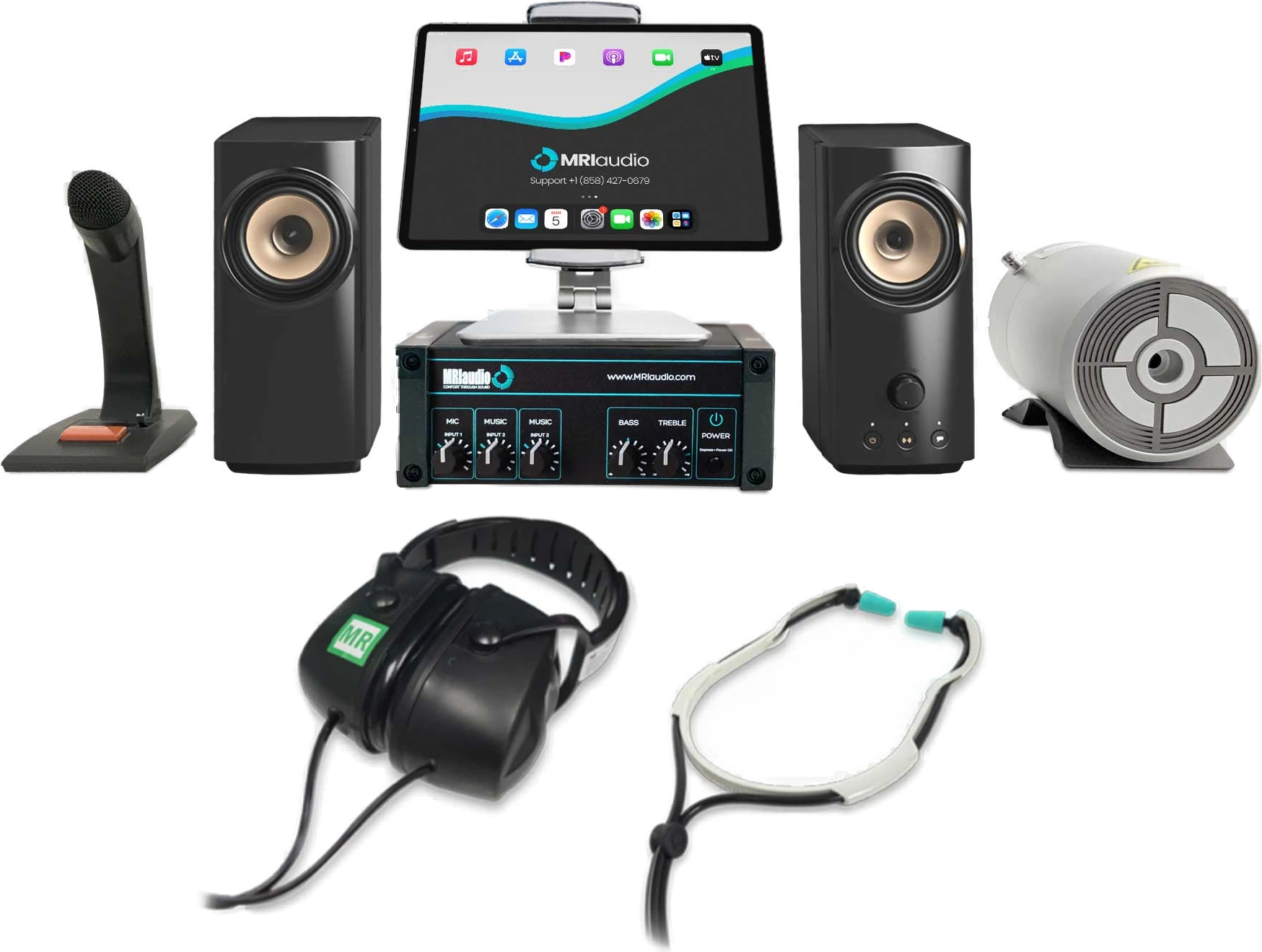
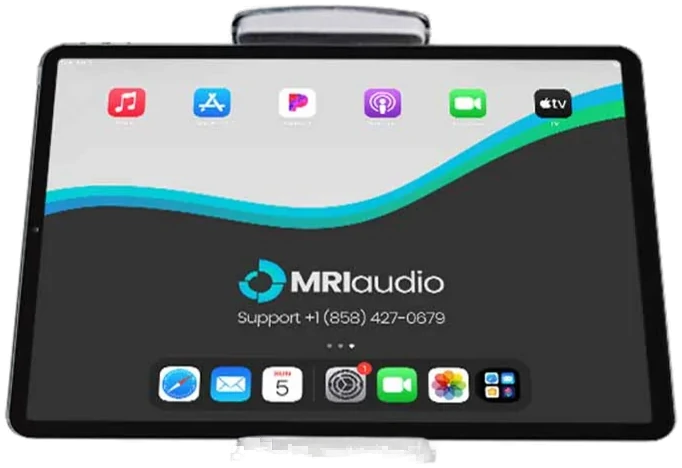
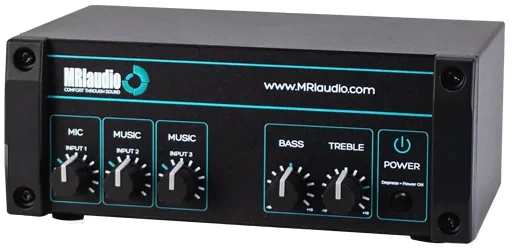
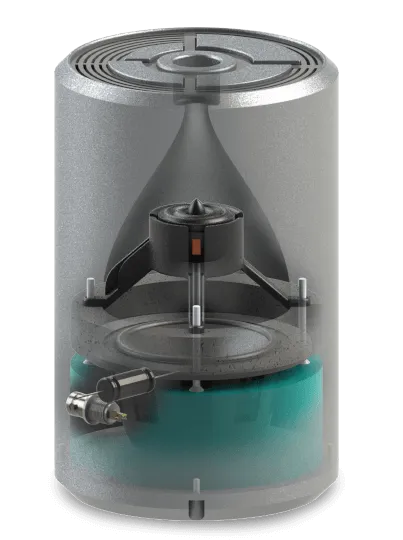
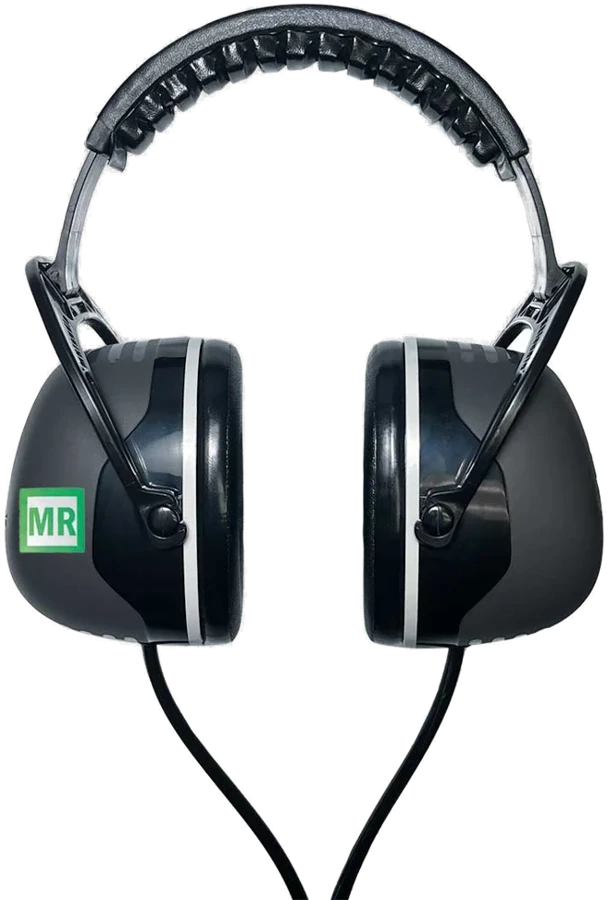
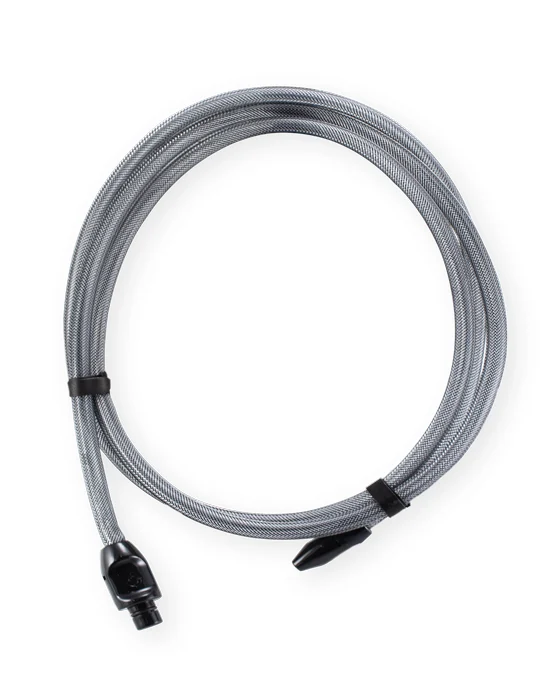
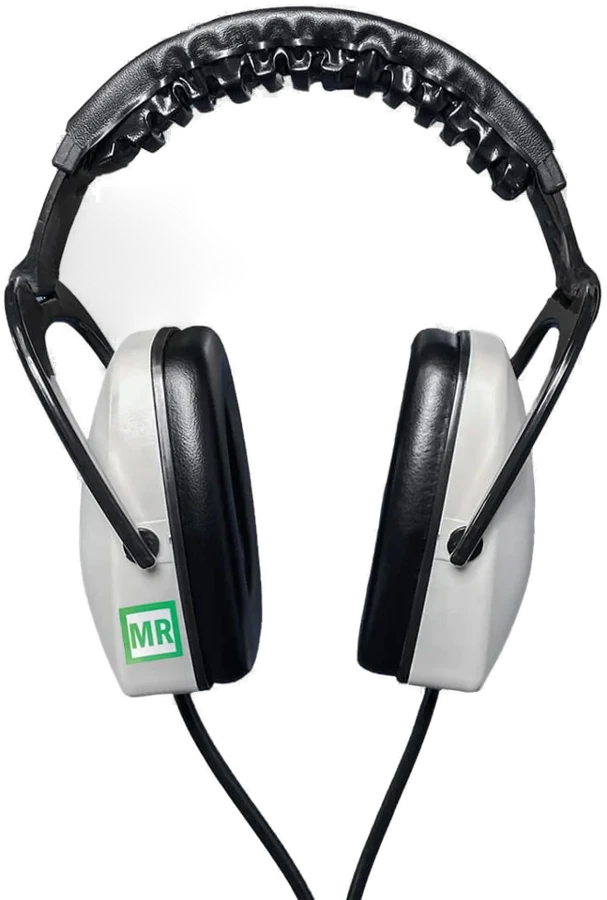
Not through ordinary headphones: nothing magnetic or electrical can go near the scanner. An MRI audio system keeps the electronics away from the patient. In ours, the Sonic Transducer makes the sound outside the bore, and air tubes carry it the last nine feet to non-magnetic headphones, so there is nothing electrical at the patient's head. The patient chooses their own music or podcast, the technologist plays it from the iPad, and presses to talk over it whenever they need to.
How can technologists talk to patients during a scan?
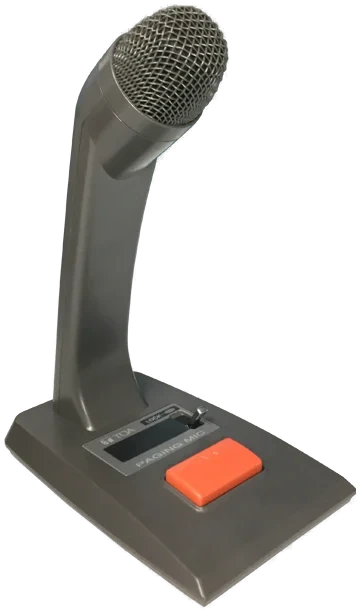
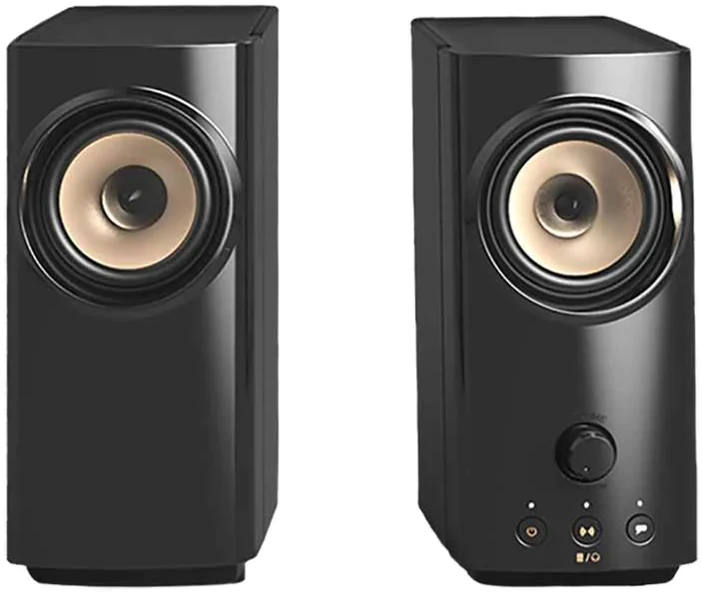
Press the push-to-talk microphone and your voice comes in over the music, clearly, then the music carries on. Desk speakers let you hear what the patient hears, at their own volume. On GE and Hitachi scanners, the Autovoice adapter lets you talk through the scanner's own intercom instead.
What equipment helps patients with claustrophobia get through an MRI?
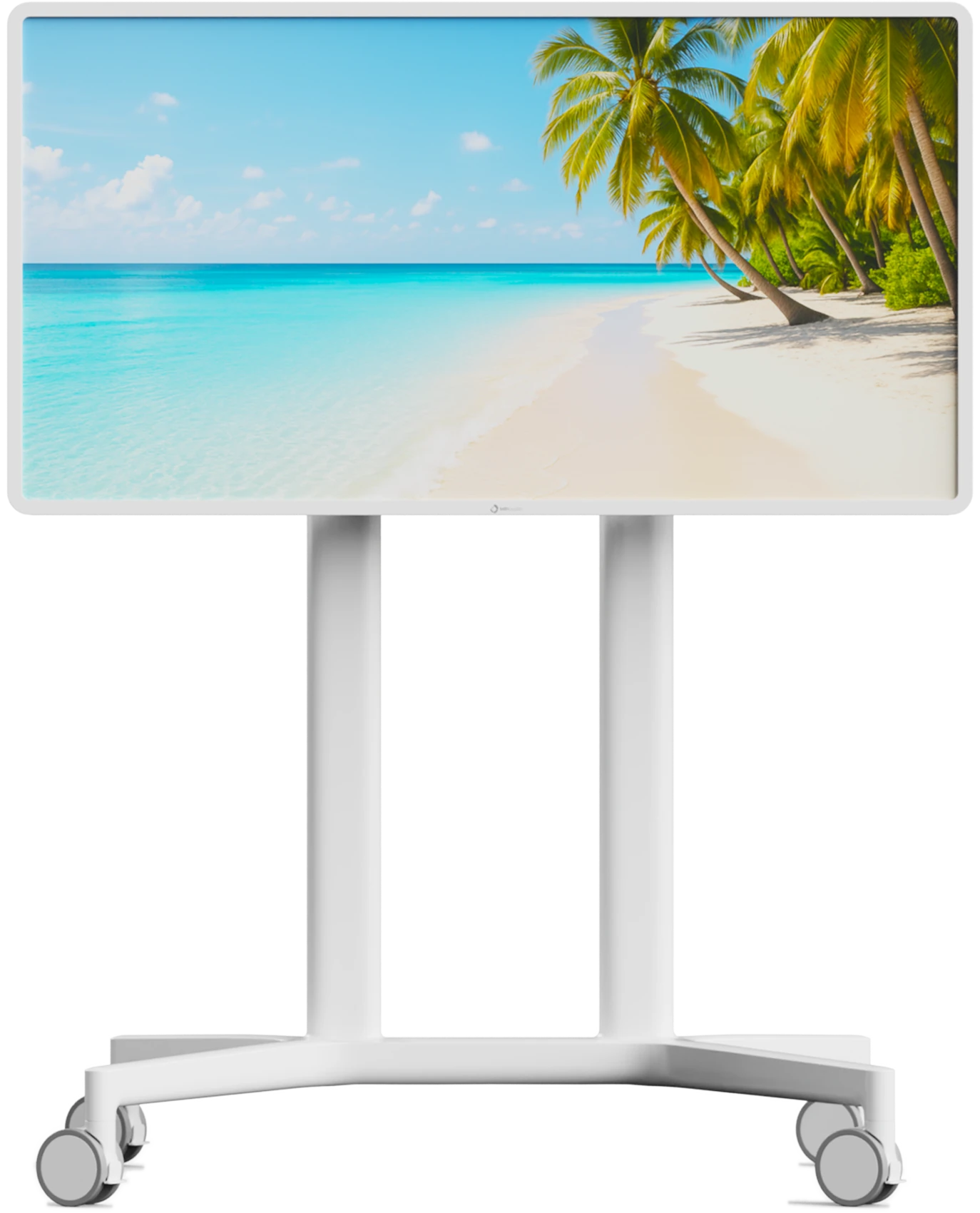
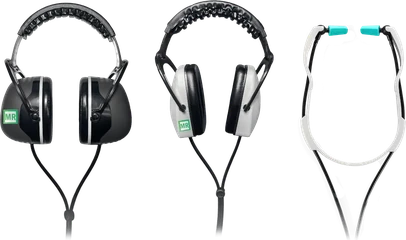
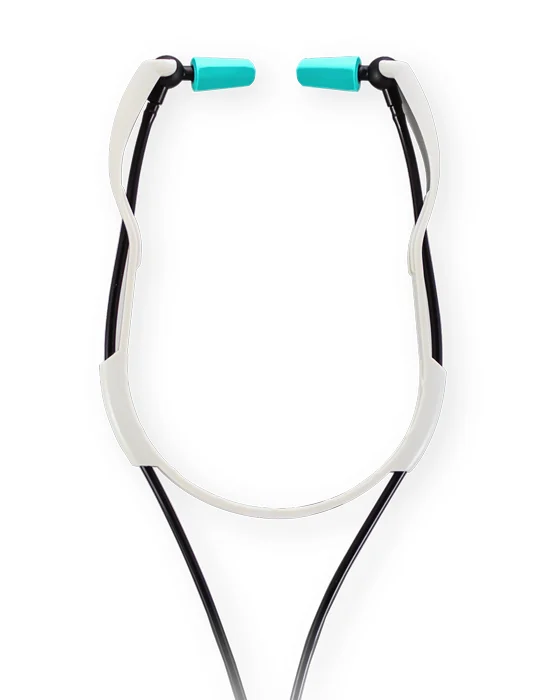
Most of it is about what the patient hears, sees and feels: music they chose with the technologist's voice over it (the Premium Sound System), a show to watch from inside the bore (MRItv™ 4K Pro), positioning pads for comfort, and slim CoilFit headphones for tight head coils. A wide-bore scanner helps too, where you have one.
How can we reduce MRI anxiety without sedation?
Start before the scan: tell the patient what they will hear, how long it takes, and that they can talk to you. In the bore, keep talking between sequences, give them music or a show they chose, and make them comfortable with pads and a blanket. For children, awake MRI programs combine preparation with in-bore video: UW–Madison's awake pediatric MRI program replaced PDC's system with ours mid-study. Read about the study.
What patient comfort accessories should an imaging center keep in stock?
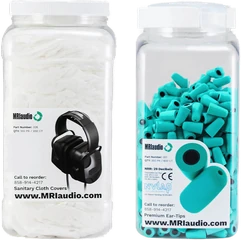
Single-use ear tips and cloth covers for the headphones, by the box; positioning pads for the table and coils; a spare pair of headphones; and CoilFit headphones for tight head coils. All of them are in our shop, and orders placed before 3:30 pm Pacific ship the same day.
Will it put noise or artifacts on our images?
It's built not to. Every part near the scanner is made for the MRI environment, and the system has been through third-party testing for artifacts and noise.
How much hearing protection does it give?
29 dB, with the over-ear and the in-ear headphones alike, tested by an ISO 17025 laboratory. That meets OSHA's requirement for sustained loud noise.
Does it work with our scanner's intercom?
The push-to-talk microphone works in any suite. On GE and Hitachi scanners, the Autovoice adapter lets you talk through the scanner's own intercom instead, and your voice still comes in over the music.
Who installs it?
Our own installation team, scheduled around your patients. Every install ends with a check that the sound, the microphone and the controls all work before we hand over.
Can we try it first?
Yes. Every system comes on a $0, 30-day trial: if it isn't right for you, send it back within 30 days of delivery for a full refund.
What's the warranty?
One year on every part, and a lifetime warranty on the Sonic Transducer for the life of the scanner it's installed on. MRIaudio Care extends the rest to three years.
How do we keep it clean?
Only the headphones touch the patient. Wipe them with your usual sanitising products, and use our single-use ear tips and cloth covers.
 MRIaudio
Contact us
Get your quote